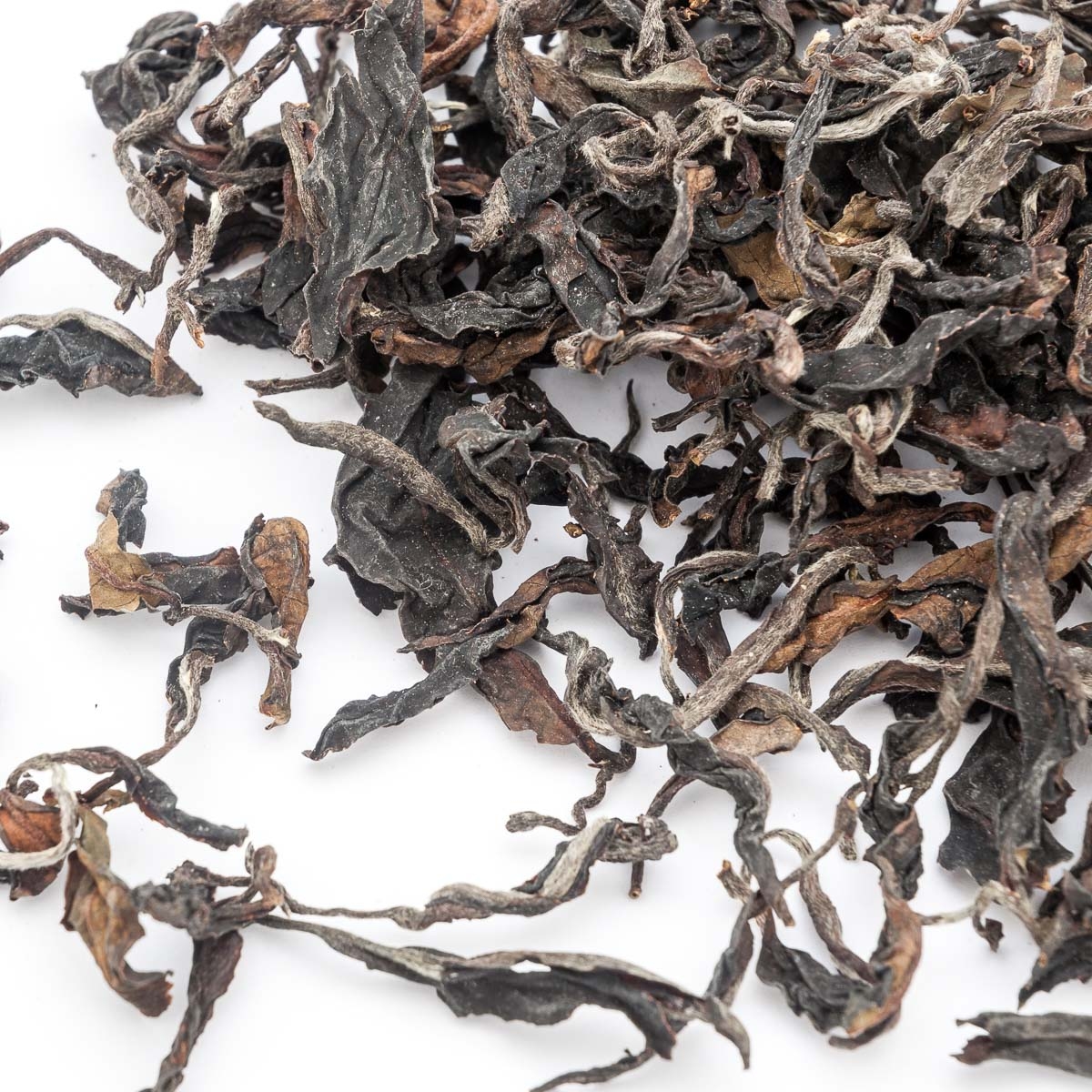
In 1985, researchers from the Yunnan Tea Research Institute discovered in the institute’s tea garden—where over 600,000 large-leaf Yunnan tea plants were planted—a tea plant with purple buds, leaves, and stems. From its fresh leaves, a roasted green tea is produced, whose leaves are purple, as is the infusion. The aroma is clean and the taste strong. This tea was named Zijuan.
Studies of anthocyanins in the Zijuan tea plant have advanced in terms of composition and quantity, revealing that Zijuan leaves contain various anthocyanin compounds, including pelargonidin, cyanidin, delphinidin, peonidin, and malvidin.
The color of new Zijuan shoots changes significantly with the seasons. From early January to the end of April, the shoots are purplish-red; from early May to early October, they are dark purple; and from late October to the end of December, they are light purplish-red. Old leaves remain dark green throughout the year. Zijuan, used as an ornamental plant in gardens, provides visual interest through its combination of purple and red among green leaves.
How to Prepare?
| Rinse the leaves first with hot water, then steep. | | | | |
| Temperature | Ratio | 1. | 2. | 3. | 4. | 5. | 6. | 7. | 8. | 9. | 10. |
| 95-100°C | 1g / 30-50ml | 30s | 20s | 25s | 35s | 50s | 70s | 90s | 120s | 150s | 200s |